Explore your next steps
Your guide to piano lessons in Swindon
Find your starting point, explore music you enjoy and build a useful routine between your Swindon piano lessons.
01
Find your starting point
Bring your musical interests
A piece you enjoy can be a starting point for piano lessons in Swindon. Bring a classical melody, one of your favourite songs or a style you are interested in. We can choose a manageable passage and explore your creativity by changing a rhythm or ending.
Take your first steps at the keyboard
You do not need previous experience or the ability to read music. We can explore the keyboard, listen to a short pattern and connect sounds with movements. Ask whenever something is unclear: there is time to try an idea before moving on. Be patient with yourself when studying a new pattern; accuracy comes before speed.
Return to piano at your current level
Returning piano students may remember a melody more readily than its notation. Bring a piece you know and we can revisit reading or coordination where needed. Whether you last played months or years ago, you do not need to recover your old standard before starting.
Plan lessons for a younger learner
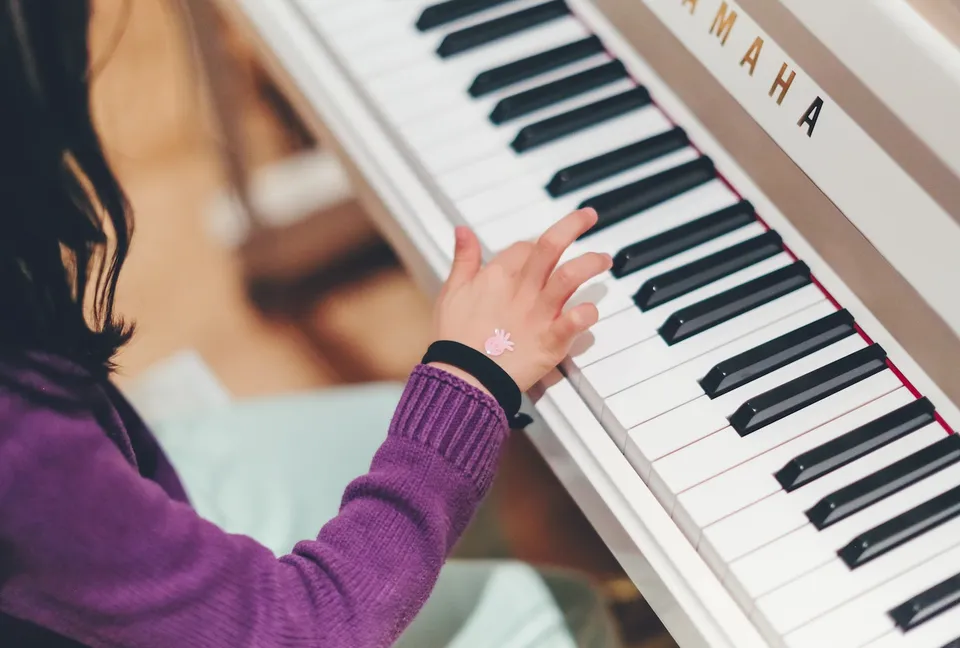
I welcome children from age five. Children and young people bring different interests and confidence levels, so include their age and experience when enquiring. Parents can offer encouragement with a small practice task; you do not need to play the piano yourself.
Make learning engaging at any age
Students can use imagination to give a phrase character: try making it sound calm, lively or questioning. Learning can be fun and purposeful at any age. Tell me whether a demonstration, a movement or a written instruction helps you most.
Choosing individual piano lessons in Swindon
Group lessons share teaching time; my Swindon piano lessons are individual, giving us room to explore your questions. Consider how the journey, session length and practice fit school, work and family life. A great teacher for you is someone whose explanations you understand and whose approach suits your aims.
02
Develop technique and musical understanding
Keep rhythm connected to the music
A steady pulse gives a phrase shape, even at a slower pace. Explore a short rhythm before adding notes, then connect it with the pitches. Increasing speed comes later: first listen for clear beginnings, endings and a continuous pulse.
Understand the roles of both hands
Explore melody and accompaniment separately before combining them. Listen for which notes should stand out and which support them. A small passage lets us discuss balance, fingering and continuity without solving every challenge in a piece at once.
Music theory at the keyboard
I teach music theory alongside practical piano skills. A repeated rhythm, scale pattern or familiar chord gives us something concrete to explore. Recognising how a pattern appears in another piece helps students approach new music with greater independence.
Choose enjoyment or ABRSM grades
Learn for enjoyment or pursue ABRSM exams, from first steps through Grade 8. Discuss the level, syllabus, materials and entry arrangements before committing. Without exams, we can still set clear aims such as shaping a phrase or completing an arrangement.
Listening to jazz piano and other styles
Jazz piano can draw your attention to rhythm and accompaniment; guitar and voice may leave more space between phrases. Try an instrumental recording across different genres and follow one part. Bring a jazz piano example you enjoy to discuss, without assuming specialist tuition in every style.
03
Make practice useful and manageable
Decide what to listen for
Give practice one clear purpose: a chord change, a rhythm or a smoother ending. Write down what a successful attempt should sound like. Note which exercise was helpful during the week and bring questions to your next lesson.
Work through a difficult transition
Slow down a short section around the difficult point. Check whether rhythm, reading or movement is interrupting your playing, then reconnect it with the surrounding music. Leave time for a favourite tune too: practice should remain fun.
Use an instrument you can access regularly
A keyboard can be a practical starting point; a piano or weighted-key digital piano supports developing technique. Tell me what you already use before buying. Consider space and regular practice opportunities as well as the instrument itself.
Recognise progress beyond a finished piece
A steadier pulse or more balanced melody can represent great progress before a piece is finished. Compare your playing with your own starting point. Students have different practice opportunities, so choose a change you can hear rather than someone else’s timetable. If you are happy to play for friends or family, a short familiar piece offers an opportunity to practise starting and finishing with confidence.
Try creating a short musical idea
Composition can start with a few notes. Repeat a rhythm, change its ending and decide what you want to express. Creating a tiny melody or an improvisation can give practice a fresh focus; record a sketch so you can return to it.
Use a recording to plan your next step
You do not need professional studio quality to hear your own playing more clearly. Record a short passage at home and listen once for the overall shape, then once for a specific feature such as the balance between your hands. A practical way forward is to choose one change and record the passage again. Our recording guide explains how to prepare if you later need a rehearsal space or studio session, including the questions to ask about equipment and costs.
04
Swindon piano lessons: practical arrangements
In-person lessons in the Swindon area or online
Lessons in person take place in my home teaching room on Bessemer Road, Swindon, SN2 1ND. I provide the full address when your first lesson is booked. Online lessons are also available if that format suits you. Mention your preference when enquiring, along with access requirements or questions about equipment. For an online lesson, agree how to position your device and connect before the session so that lesson time can focus on your playing. If you plan to travel from elsewhere in the Swindon area, check your journey before agreeing an in-person time.
Find a realistic lesson pattern
Weekly or fortnightly lessons give you regular opportunities to revisit ideas and discuss your practice. Another agreed pattern may also be possible. Consider your other commitments and the time available at the keyboard between appointments. Include preferred days and times when you get in touch. An enquiry begins a conversation about suitable arrangements; it does not confirm an appointment or reserve a regular lesson slot. We can discuss a routine that is realistic for you. Swindon piano lessons should fit into everyday life without removing the fun from playing. Leave some practice time for a favourite tune as well as the next task.
Piano lesson prices and cancellation arrangements
Individual lessons cost £12.50 for 30 minutes, £17 for 45 minutes or £25 for an hour and are pay-as-you-go. Read the prices page and booking information and confirm payment arrangements before starting. A lesson cancelled within 24 hours of its arranged time is charged at the full price. Contact me early if plans change. Gift vouchers are also available; ask about their value, booking process and any validity conditions before purchasing.
Tell Emma what you would like to learn
When you ask about piano lessons, include your experience, musical interests, preferred format and available times. For a child, please include their age. You can read about my musical background and how lessons work for more context. A favourite piece, a question about starting or a skill you want to develop is enough to begin. You do not need a detailed study plan before getting in touch.
Connect lessons with music around Swindon
Listening beyond your lesson can help you decide what you want to learn next. Our Swindon live music guide suggests ways to approach an event in town, while the local musicians guide offers listening ideas from artists connected with Swindon. Check the organiser’s current programme and arrangements before travelling. Each business or venue operates independently of these lessons. Choose one detail to bring back to the piano, such as an expressive melody or a clear ending, and discuss it with your teacher.